Saturday, February 28, 2009


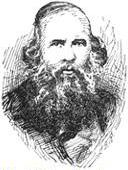
On Rev Jeffrey Wolf, missionary to the Jews
The following portrait of this very interesting character was drawn by one who intimately knew him.:—
" A man who, at Rome, calls the Pope ' the dust of the earth,' and tells the Jews at Jerusalem that the Gemara is a lie ;* who passes his days in disputation, and his nights in digging the Talmud; to whom a floor of brick is a feather bed, and a box a bolster; who finds or makes a friend alike in the persecutor of his former or present faith ; who can conciliate a pasha, or confute a patriarch; who travels without a guide, speaks without an interpreter, can live without food, and pay without money; forgiving all the insults he meets with, and forgetting all the flattery he receives ; who knows little of worldly conduct, and yet accommodates himself to all men, without giving offence to any; such a man,—and such and more is Wolff,—must excite no ordinary degree of attention in a country, and among a people, whose monotony of manners has remained undisturbed for centuries. By such an instrument, whom no school has taught, whom no college could hold, is the way of the Judean wilderness preparing." Wolff, for laboriousness has been classed with Wesley and Whitefield, and for eccentricity has been ranked with Ber- ridge of Everton, and Eowland Hill.
From Letters on Palestine
S. has a great post on Wolf (here).
" A man who, at Rome, calls the Pope ' the dust of the earth,' and tells the Jews at Jerusalem that the Gemara is a lie ;* who passes his days in disputation, and his nights in digging the Talmud; to whom a floor of brick is a feather bed, and a box a bolster; who finds or makes a friend alike in the persecutor of his former or present faith ; who can conciliate a pasha, or confute a patriarch; who travels without a guide, speaks without an interpreter, can live without food, and pay without money; forgiving all the insults he meets with, and forgetting all the flattery he receives ; who knows little of worldly conduct, and yet accommodates himself to all men, without giving offence to any; such a man,—and such and more is Wolff,—must excite no ordinary degree of attention in a country, and among a people, whose monotony of manners has remained undisturbed for centuries. By such an instrument, whom no school has taught, whom no college could hold, is the way of the Judean wilderness preparing." Wolff, for laboriousness has been classed with Wesley and Whitefield, and for eccentricity has been ranked with Ber- ridge of Everton, and Eowland Hill.
From Letters on Palestine
S. has a great post on Wolf (here).
Friday, February 27, 2009
כך היא דרכה של תורה - ב
I mentioned in my earlier post, the book דרכה של תורה of Pineles - a book that someone of the erudition of Prof. Saul Lieberman refers to with great admiration. I now see that Hebrewbooks has added the refutation by his brother-in-law - כך דרכה של תורה (Vol. 1, and 2). Chanan Gafni in his excellent dissertation on Talmud study in the 19th century describes the polemic like this (click to enlarge - pages maybe out of order):


See there for a lot more of the same.
Some other new books:
A polemical pamphlet from R' Zevin urging Yeshiva Bachurim to go to the army (translated somewhre - probably Tradition).
Kisvei R' Yehuda Aryeh Modena (I think this was already at Seforimonline)
Rediscovery of Chida on Birkat HaChammah
In a letter to Yitzchak, Dr. Ezra Chwat writes:
"A most recent finding is the rediscovery of ms HUC 795 - the complete Birkat HaHamma attributed to the HIDA. Upon our request, the staff of HUC found after it was misplaced at least 30 years ago, and have generously sent us color scans (it's illuminated). You can post this note if you wish."
Somewhat related a Yiddish sefer on Birkat HaChammah (1897) has recently been placed online and can be found here.
"A most recent finding is the rediscovery of ms HUC 795 - the complete Birkat HaHamma attributed to the HIDA. Upon our request, the staff of HUC found after it was misplaced at least 30 years ago, and have generously sent us color scans (it's illuminated). You can post this note if you wish."
Somewhat related a Yiddish sefer on Birkat HaChammah (1897) has recently been placed online and can be found here.
Wednesday, February 25, 2009
Tuesday, February 24, 2009

Extra stanza for Selichot on Taanis Esther - Thanks to the IMHM blog:
תַעֲנֶה לְקורְאֶיךָ וְהַסְכֵת מִמְעונִים:
תִשְמַע שַוְעַת צועֲקֶיךָ שומֵעַ אֶל אֶבְיונִים:
תְרַחֵם בָנֶיךָ כְרַחֵם אָב עַל בָנִים:
עֲנֵנו כְמו שֶעָנִיתָ לְמָרְדְכָי וְאֶסְתֵר וְתָלוי עַל הָעֵץ חֲמִשִים הָאַב עִם בָנים
[Update: Yitzhak writes to me that:
"I'm not sure I understand what has been newly discovered. The stanza תענה לקוראך is well known, with many (most?) modern Siddurim includingit, often in parenthesis and / or with an accompanying note that customs vary over its inclusion. אוצר התפילות has it in parenthesis, although עבודת ישראל doesn't have it at all. קול יעקב החדש, סידור ווילנא and (at least one edition of) the Artscroll Siddur have it (with parentheses and / or notes), while (at least one edition of) תקון מאיר does not." ]
Subscribe to:
Posts (Atom)